| In 1934 the Royal Air Force
tested Britain's air defences with
practice raids. This led AP 'Jimmy' Rowe
to raise
concerns about Britain's air defences, and
the following year work began to develop a
radar warning system [radar
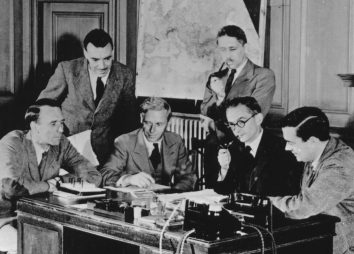
story], with talented scientists
coming from top universities to work on it
[people].
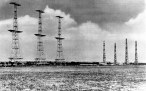
Radar is able to detect aircraft by
detecting echoes from a pulse of radio
waves [what is
radar?], and defended Britain by
giving early warning of approaching
hostile aircraft [radar
in World War II]. Just before war was declared in 1939,
the Germans sent an airship to spy on the
radar work, then at Bawdsey on the Suffolk
coast [*see below]. The radar scientists were
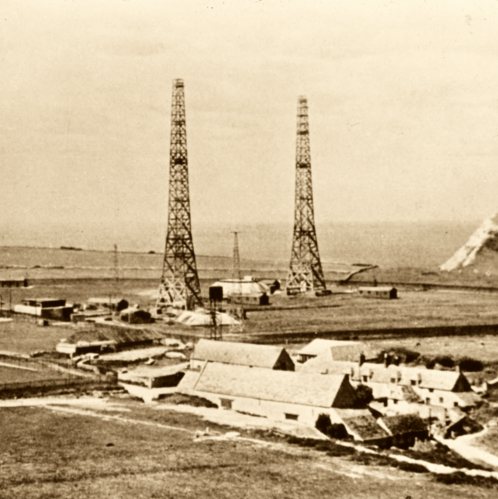
evacuated from Bawdsey, initially to
Dundee. In May 1940 they moved
again, this time to Worth Matravers in Purbeck,
Dorset UK [radar
in Purbeck]. While in Purbeck,
the scientists developed many
new technologies. These included the
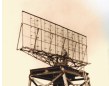
now familiar rotating aerial and map like
radar display (Plan Position Indicator)
and the cavity magnetron which was able to
produce powerful radio signals at short
wavelengths.
The Germans had also built radar
defences and in February 1942 British
paratroops raided one of their radars at
Bruneval on the French coast. They
brought back key pieces of the radar to
understand better how it worked and how it
might be countered. After this
there were fears that the Germans might
raid Worth Matravers, and the scientists
hastily moved to Malvern in May
1942. A working RAF radar station
remained at Worth, and the last tower was
not taken down until 1976.
After the war, many of the ideas
developed in Purbeck went on to form the
basis of the electronics industry we take
for granted today [legacy].
Radar is important for keeping ships and
aircraft safe, and is key to manage
aircraft in flight (Air Traffic
Control). Radar has gone on to find
applications as diverse as weather
forecasting, ornithology and speed traps
for cars!
The cavity magnetron, developed for
radar, was Top Secret in Word
War II but now provides the source of
unseen heat in microwave ovens
around the world! Short wavelength
radar technology was also behind the growth of microwave
communications links after the war, supporting
telephone, television and satellite
communications.
The Purbeck
Radar Museum Trust was set up in 1991
by a few people interested in keeping a
public record of the wartime work
on radar. To raise the profile of
the early radar work, the Trust has sponsored various
exhibitions and publications [milestones].
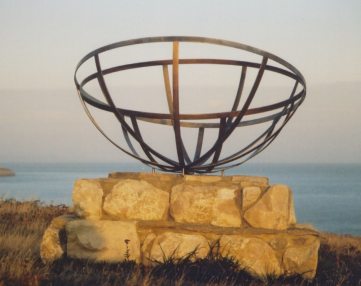
A memorial to commemorate the wartime
radar work at Worth Matravers was unveiled
in October 2001 [radar
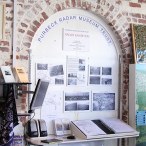
memorial]. An historical radar
exhibition was opened in Worth Matravers in July
2006 and moved to the Swanage Museum &
Heritage Centre in April 2007 [exhibition].
The Trust also published this website [www.purbeckradar.org.uk]
to co-incide with the exhibition opening.
There are also references and
links on where to go for more information
[more..].
In July 2008 the Trust also opened an historical radar
reference library in collaboration
with the Swanage Museum.
If you have photographs, papers, items
or memorabilia relating to early radar
development the Radar Trust would be
delighted to hear from you [contact].
The Trust would also be keen to hear from
anyone interested in helping assemble
educational material about this significant part of our
heritage [study].
|